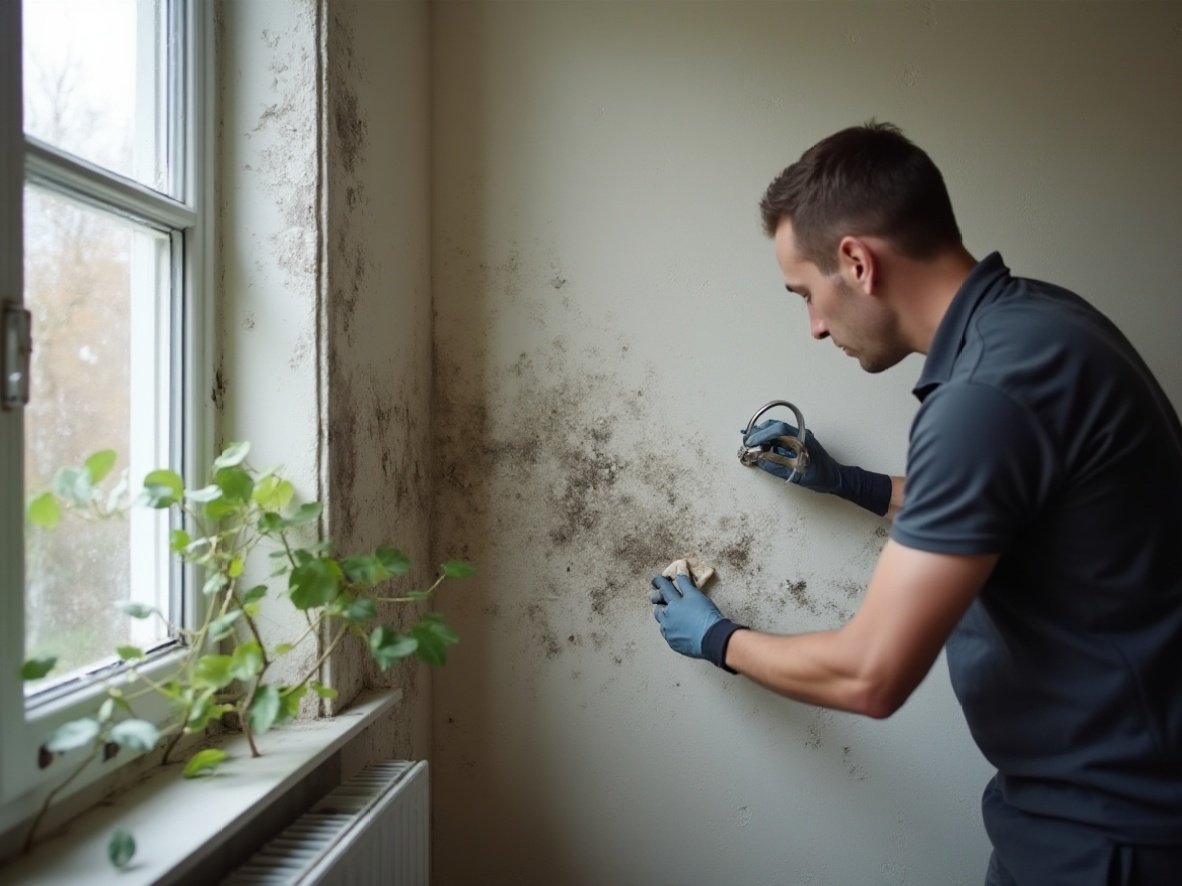
Proper Cause Detection
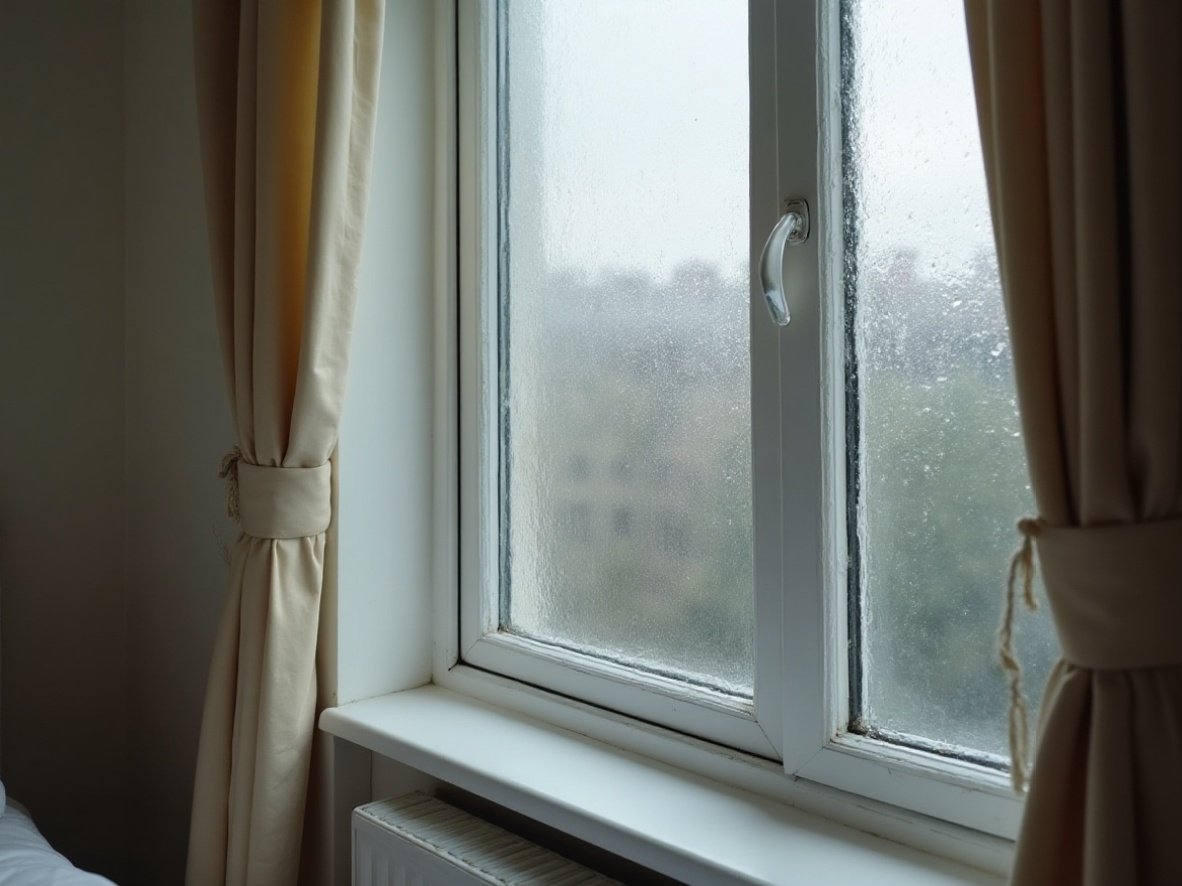
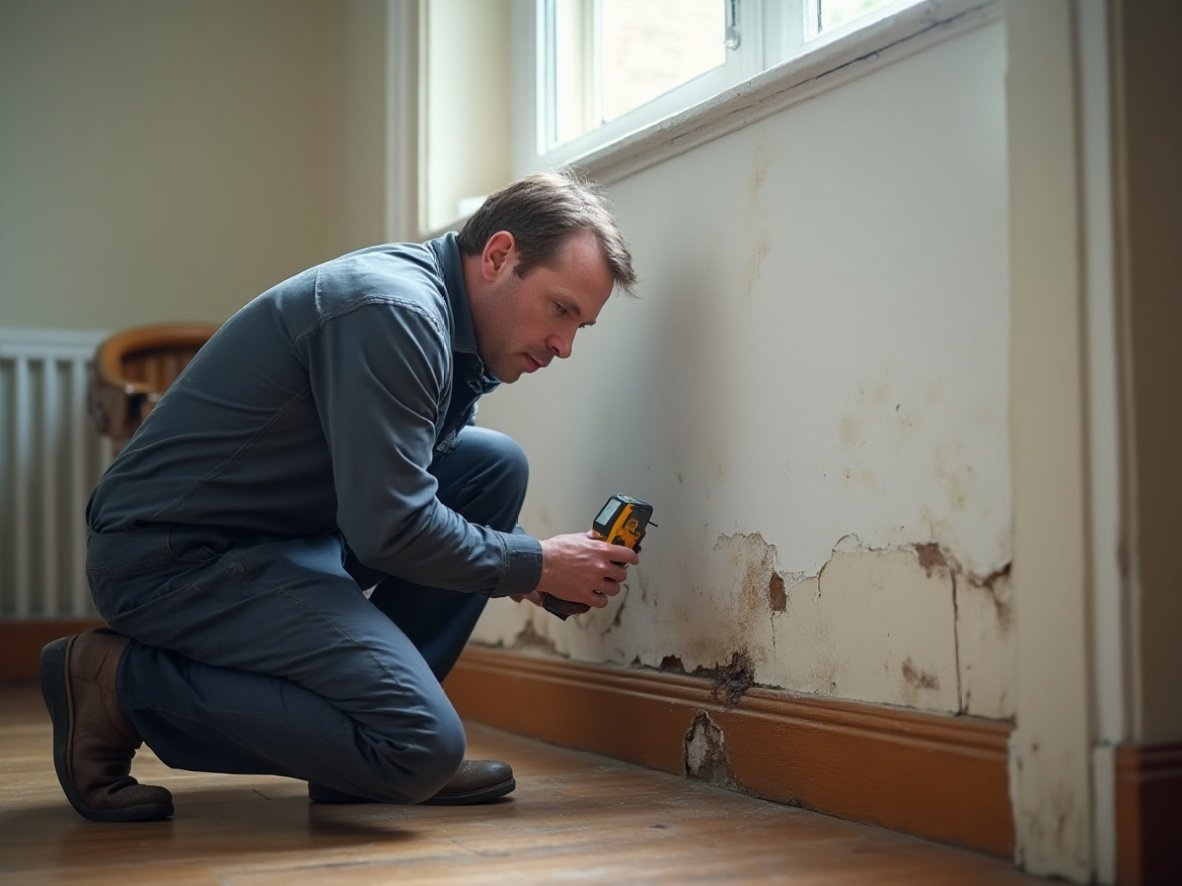
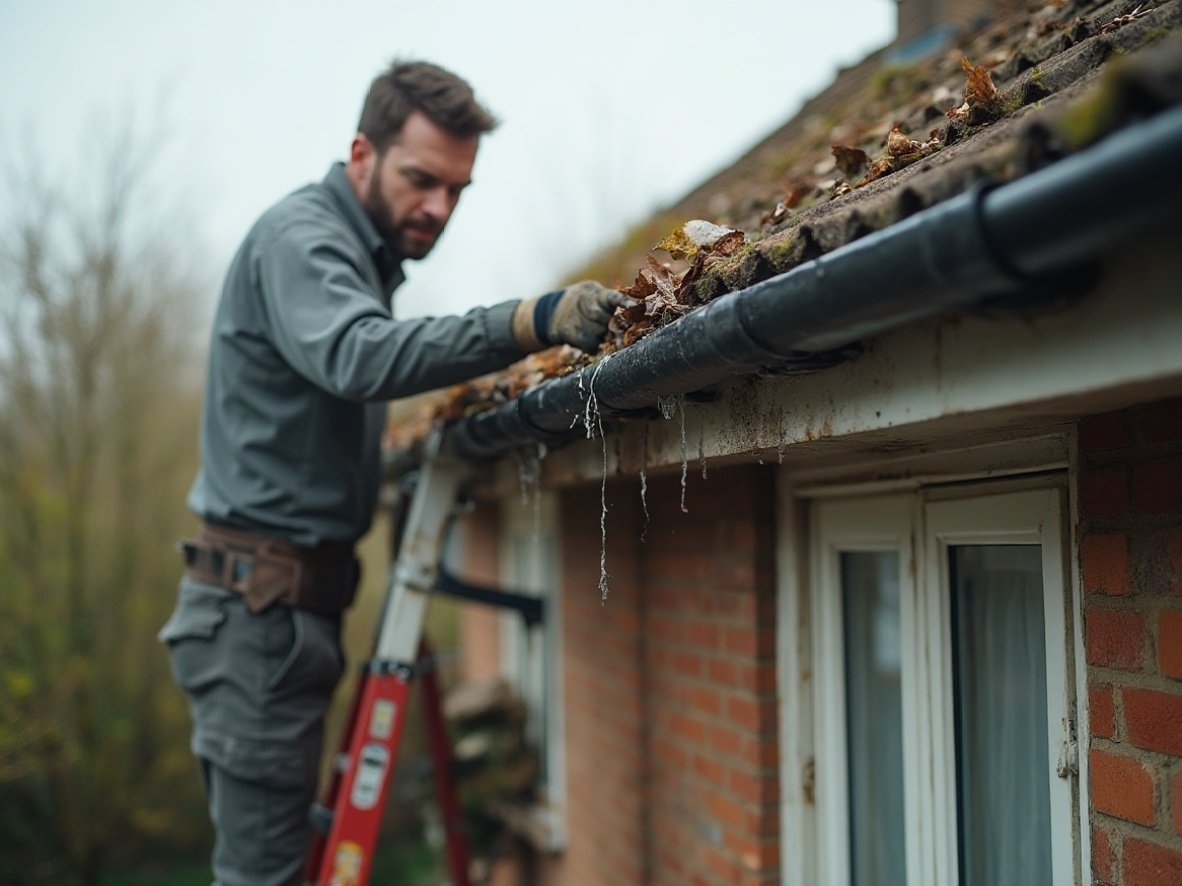
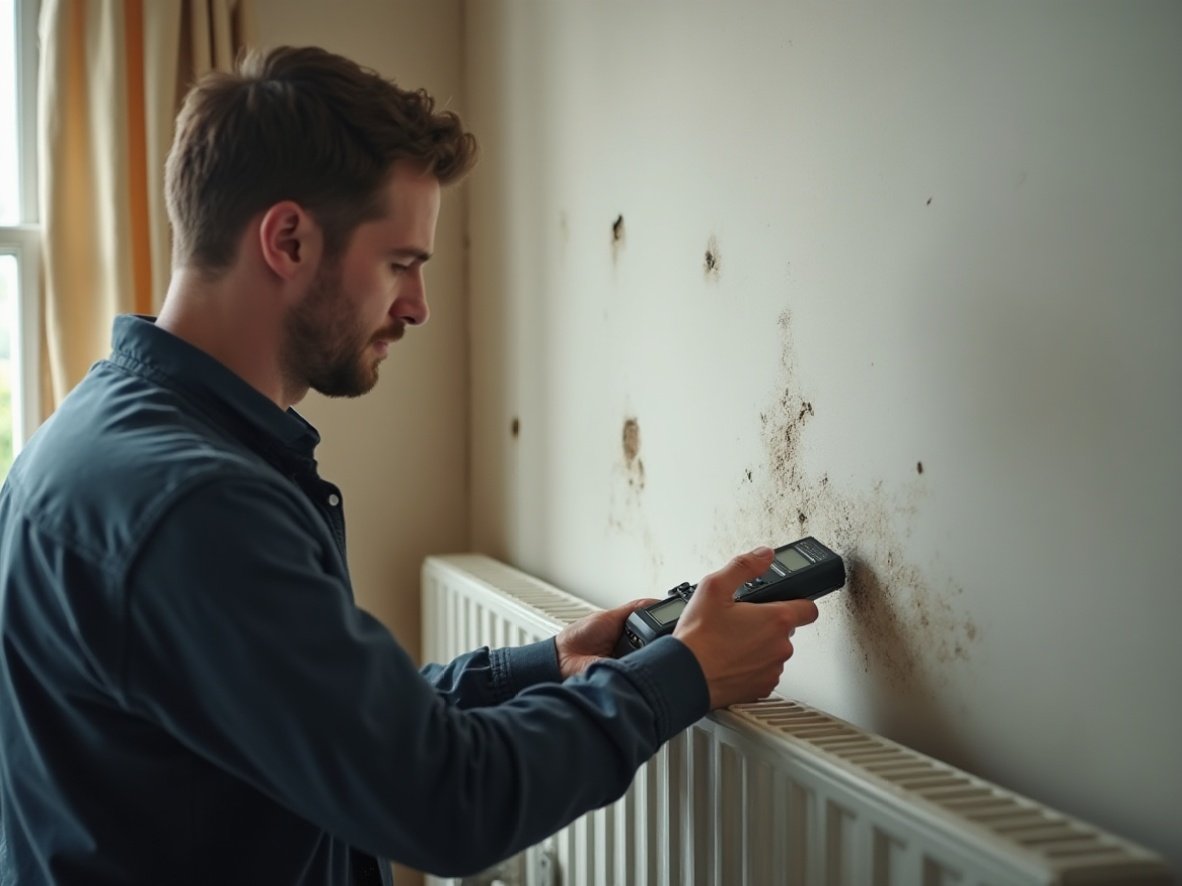
We don’t just remove visible mould. We identify whether it’s condensation, damp, or a hidden leak before treating it.
Mould removal in Egham is most effective when the underlying issue is properly understood. Simply cleaning the surface often leads to the problem returning in the same areas.
Every property in Egham behaves differently depending on layout, ventilation, and daily use. The aim is to remove existing mould and help create conditions where it’s less likely to come back.



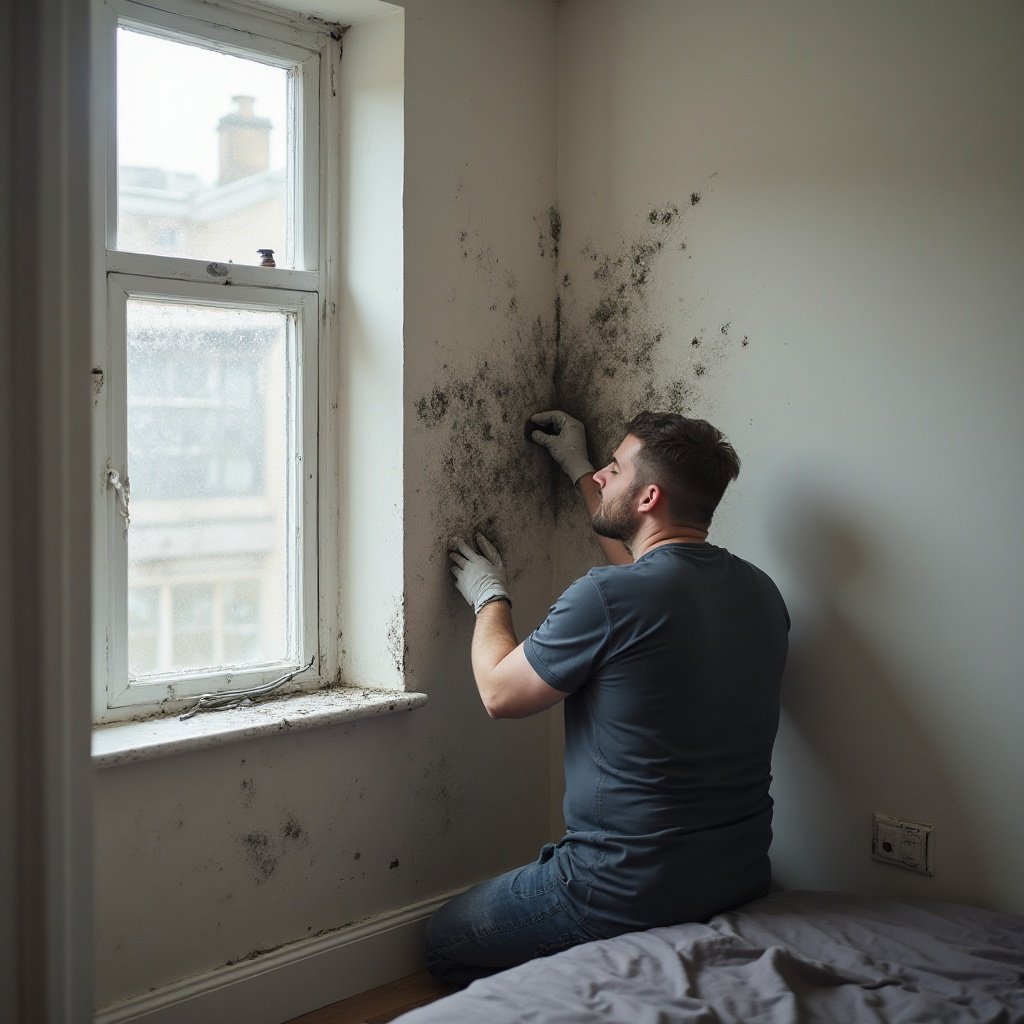
Mould problems in Egham often start small and build up over time. A patch in the corner of a room or around a window might not seem urgent at first, but it usually points to ongoing moisture build-up that hasn’t been addressed. In many properties, especially flats or older buildings, this comes down to how air moves through the space and how surfaces react to daily humidity.
We recently worked on a property in Egham where mould had formed behind a sofa placed against an external wall. The tenant had cleaned it more than once, but it kept returning. The issue wasn’t the cleaning — it was restricted airflow and a cold wall surface that allowed condensation to settle repeatedly. Once that was identified, the treatment focused on both removal and improving how that area functioned.
The removal process itself depends on how far the mould has spread. Surface-level growth can often be treated and cleaned effectively, but when mould has worked into paint or plaster, those layers may need to be taken back. Skipping that step is one of the main reasons mould reappears through fresh decoration.
Another factor is how the property is used day to day. Activities like cooking, showering, or drying clothes indoors all contribute to humidity levels, especially in spaces with limited ventilation. If that moisture isn’t cleared properly, it settles on colder areas such as walls, ceilings, and window edges.
Access can also affect how the work is carried out. In many homes in Egham, furniture placement or tight layouts make certain areas harder to reach. We often find mould developing in hidden spots — behind wardrobes, along skirting boards, or in corners where air doesn’t circulate well.
It’s also important to be realistic about what mould removal can achieve on its own. If the underlying cause remains — whether that’s poor ventilation, a cold surface, or an ongoing source of moisture — the problem can return over time. That’s why the focus is always on understanding the full situation before and after treatment.
At Mould Inspection London, the aim is to carry out mould removal in Egham in a way that actually holds. That means dealing with the visible issue properly while also helping you understand what needs to change to stop it coming back.

Mould kept coming back behind our wardrobe no matter how many times we cleaned it. The technician explained it was condensation getting trapped against the wall. After the treatment and moving the furniture slightly, it hasn’t returned.
Booked them after trying to deal with it myself for months. What I liked is they didn’t just clean it and leave — they explained why it was happening and what to change. Feels properly resolved now.
We had mould on the ceiling near the bathroom and thought it was just poor cleaning. Turned out the extractor fan wasn’t working properly. They sorted the mould and explained what needed fixing.
I was expecting a quick clean, but they pointed out a small leak I hadn’t noticed. That explained why the mould kept coming back. Glad we dealt with it properly instead of just covering it up again.
The mould around our windows was getting worse every winter. The visit was straightforward, no overcomplicating things. They treated the areas and explained how to manage condensation better. Big improvement since.
We had a constant musty smell in the bedroom and didn’t realise it was mould starting in the corner. They didn’t rush the job — first checked the room properly, then treated the area. Also gave practical advice that actually made sense.
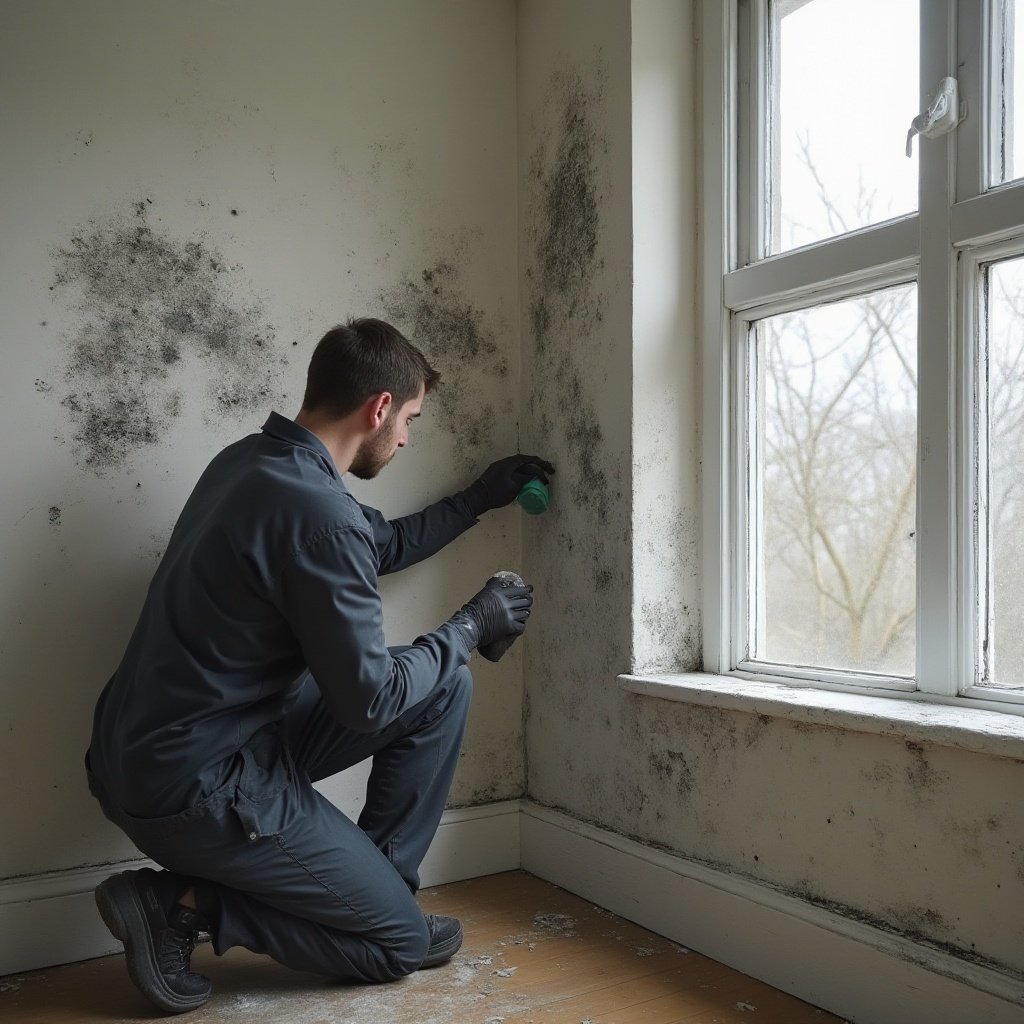
After mould has been treated, the key question is how stable the environment remains. In many properties in Egham, mould doesn’t return because the treatment failed — it comes back because the same moisture conditions slowly build up again.
We recently revisited a flat in Egham where mould had been removed from a bedroom wall near the window. The treatment held well initially, but over winter the room was kept closed most of the time and heating was used inconsistently. That led to repeated condensation forming on the colder surface, and early signs of mould started to appear again in the same area.
One of the main factors is how quickly humid air is removed after it’s created. Everyday activities like cooking or showering release moisture into the air, and in smaller or poorly ventilated spaces, that moisture spreads and settles before it has a chance to clear. Once it starts settling on colder surfaces, the conditions for mould return quite quickly.
Temperature differences also play a role. When walls or ceilings stay cooler than the rest of the room, they attract moisture more easily. This is common in properties with external walls or uneven insulation. Even if the room feels comfortable overall, those cooler areas can still develop surface condensation.
There are also practical limitations depending on the layout. Furniture placed tightly against walls can block airflow, creating pockets where moisture lingers. In many homes in Egham, we find that mould develops in these hidden areas first, often before it becomes visible elsewhere.
It’s important to understand that mould removal is one part of the solution. For longer-lasting results, the environment needs to support it. That might involve small changes to ventilation habits, adjusting how rooms are used, or identifying areas where moisture is consistently building up.
At Mould Inspection London, we focus on helping you maintain those conditions after the work is done. The goal isn’t just to remove mould once, but to reduce the chance of dealing with the same issue again under normal living conditions.
Recurring Mould Solved
We regularly deal with mould that keeps coming back — identifying the real cause before treating it properly.
Cause, Not Just Cleaning
We don’t just remove surface mould. We check moisture levels, airflow, and hidden issues behind the problem.
Built for London Homes
From compact flats to older properties, we understand how mould develops in real London living conditions.
Clear, Practical Advice
You’ll know exactly what caused the issue and what needs to change to stop it returning.
Postcode coverage: TW20
Other locations we cover nearby: Egham